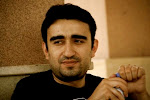
In Your Eyes
When I look in your eyes
I see there a fire of life,
There's no place for lies
When I look in your eyes.
In your eyes I see love
Love that's not recognized,
Love that shines like the sun
That might never be mine.
I have never seen serenity
Like the one in your eyes,
Eyes that I cause to cry
Sometimes … Time after time.
And if your eyes could speak
I know what they would say
No need to hear to realize
That things will never be the same.
This life is a set of moments
Comprised of thoughts, emotions, deeds
Some bring joy, some bring worries
But in the end we all return to Him.
Sometimes I feel like "I wish it were…"
But God's got his Master Plan we don't know,
And I'm grateful for the chance
To see what I saw in your eyes.
I wish this moment lasts forever
When I saw midnight blue sky and stars
In your eyes I might not look into ever.
But whatever happens is the will of God.
Though I see tears in your eyes,
Tears that we try to hide.
But I feel in my heart
What I see in your eyes.
In your eyes I see me,
We're part of One Being
I am yours, you are mine.
That's what I read in your eyes.
Thursday, May 20, 2010

Wednesday, May 19, 2010
LİRİKA: Ay gözəllər gözəli, göstər mənə üzünü
***
Ay gözəllər gözəli, göstər mənə üzünü.
Necə edim ki, məni məhrəm bilib niqabını açasan?
Harama baxan göz seni görməz, qulaq duymaz sözünü.
Necə edim ki, günahımdan keçib bağışlayasan?
Həyasız dünyanın açıq üzünü, hər yerini görmüşəm
Hicabsız, sirrsiz, vəfasiz dünyaya vermişəm tələq
Qırx məqamdan keçib indi qapına düşmüşəm
Üz dönmə məndən, ay gözəl, yoxsa olaram həlak.
Ay gözəllər gözəli, göstər mənə üzünü.
Necə edim ki, məni məhrəm bilib niqabını açasan?
Harama baxan göz seni görməz, qulaq duymaz sözünü.
Necə edim ki, günahımdan keçib bağışlayasan?
Həyasız dünyanın açıq üzünü, hər yerini görmüşəm
Hicabsız, sirrsiz, vəfasiz dünyaya vermişəm tələq
Qırx məqamdan keçib indi qapına düşmüşəm
Üz dönmə məndən, ay gözəl, yoxsa olaram həlak.
Tuesday, May 18, 2010
LIRIKA: I Don't Exist Without You
I Don't Exist Without You
I don't exist without You.
There is no "I" but only You.
Easy to say – I wish I could
Realize and live it through.
So many curtains between us;
Curtains created by my nafs,
By society, illusions and generations
Of shirk, injustices and innovations.
I curse tyrants but terrorize my soul
Until there is no space for love
And I feel like I am an earthen jug
Empty of water, not to mention wine.
I'm lost, please, help me find the Way
Explore the spirit You put into a piece of clay.
First guide me through the gate of law
Followed by the gate of divine love
Then let me into awareness of Huu
Until I'm able to recognize the Truth
The truth that there is no god but You
And I don't exist without You.
Let me be loved by Your beloved
And strong enough to ignore the crowd
Allow me love those who love You
Without the fear of wicked evildoers
I know You pointed the path
To gain Your love, but not You wrath.
The path is sweltering like a midday heat
But there is Kawthar in the end of it.
Here I am with my brow on the earth
The clean earth I am made of
I return to myself so I return to You
Coz I don't exist without You.
I don't exist without You.
There is no "I" but only You.
Easy to say – I wish I could
Realize and live it through.
So many curtains between us;
Curtains created by my nafs,
By society, illusions and generations
Of shirk, injustices and innovations.
I curse tyrants but terrorize my soul
Until there is no space for love
And I feel like I am an earthen jug
Empty of water, not to mention wine.
I'm lost, please, help me find the Way
Explore the spirit You put into a piece of clay.
First guide me through the gate of law
Followed by the gate of divine love
Then let me into awareness of Huu
Until I'm able to recognize the Truth
The truth that there is no god but You
And I don't exist without You.
Let me be loved by Your beloved
And strong enough to ignore the crowd
Allow me love those who love You
Without the fear of wicked evildoers
I know You pointed the path
To gain Your love, but not You wrath.
The path is sweltering like a midday heat
But there is Kawthar in the end of it.
Here I am with my brow on the earth
The clean earth I am made of
I return to myself so I return to You
Coz I don't exist without You.
Monday, May 17, 2010
LIRIKA: Baki kucheleri
Baki küçələri
Gecə zülmetindən sonra açılır səhər
Günəş göz açır, oyanır şəhər
Şəhər bir əfsanədir, nağıldır onun günü, gecəsi
Qan damarları kimi ömür verən Bakı küçələri
Dünyaya göz açmışam, adam olmuşam burda
Sevinc, qəm, sevgi, hər şey gördüm bu şəhərdə
Bir gün toy səhnəsi, başqa gün yas məclisi
Neçə ömrün meydanı oldunuz, ay Bakı küçələri.
Buradır könüllərin görüşdüyü-ayrıldığı məkan
Leyaqət, xəyanet də keçib gözünüzün qabağından
Unudulduz, İçəri Şəhərin qədim məscidləri kimi
Doğma, əziz, vəfalı, gözəl Bakı küçələri
Üzünüzə vurulub yaralar, zərbələr
Elə bil zəbt etidlər sizi düşmənlər
Əldən getdiniz, bilsəniz, bağışlayın məni
Tozlu, yaralı, qocalmış Bakı küçələri
Gecə zülmetindən sonra açılır səhər
Günəş göz açır, oyanır şəhər
Şəhər bir əfsanədir, nağıldır onun günü, gecəsi
Qan damarları kimi ömür verən Bakı küçələri
Dünyaya göz açmışam, adam olmuşam burda
Sevinc, qəm, sevgi, hər şey gördüm bu şəhərdə
Bir gün toy səhnəsi, başqa gün yas məclisi
Neçə ömrün meydanı oldunuz, ay Bakı küçələri.
Buradır könüllərin görüşdüyü-ayrıldığı məkan
Leyaqət, xəyanet də keçib gözünüzün qabağından
Unudulduz, İçəri Şəhərin qədim məscidləri kimi
Doğma, əziz, vəfalı, gözəl Bakı küçələri
Üzünüzə vurulub yaralar, zərbələr
Elə bil zəbt etidlər sizi düşmənlər
Əldən getdiniz, bilsəniz, bağışlayın məni
Tozlu, yaralı, qocalmış Bakı küçələri
Saturday, May 15, 2010
LIRIKA: Cehenneme dushsem
Cəhənnəmə düşsəm
"Mal-dövlətim sipərdir" ağıllı cahil deyir
Allah göydədir, yerdədir dünya işləri
Allah uzaqdadır, dünya mali yaxında
Amma varmı onun xeyri?
Əgər cəhənnəmə düşsəm ...
Pulum, evim-eşiyim, zinətim, maşınım var
Arvad-uşağım öz yerində, məşuqəm - ulduzdur, yani „super star"
Qohum-əqrəbə, dost-tanışım paxıllıq edir hər an
Amma varmı bunun faydası?
Sonra cəhənnəmə düşsəm ...
İşlərim keçsin deyə yaman yaltaqlanıram bəzən
Kimə lazım – şirinlik, kimə lazım – hörmət edənəm
Neyniyim, bu dünyanın işləri keçməz, gözə girməsən
Amma nədir onun bəhrəsi?
Nəticədə cəhənnəmə düşsəm ...
Qəbir daşım olsa mərmər, yola salan – Sheyx ul-İslam
Yasa bərkgedənlər gəlsələr, yeyib-içməyə dönsə ehsan
Mənim üçün mollalara günde "Yasin" oxutdurulsa belə
Nədir məqbərənin, fəxri xiyabanının faydası?
Ölüb, cəhənnəmə düşsəm …
Ömür boyu yaxşı alver etmişəm
Çox şey ucuz alub baha satmışam
Sən demə cənnətdəki yerimi ucuz vermişəm
Bəs nədir onda bu alverin xeyri?
Əger cəhənnəmə düşsəm …
Neyimədir bu dünyanın yaraşıgı?
İşde cəhənnəmə düşsəm ...
Nədir həyatımın mənası?
Sonda cəhənnəmə düşsəm.
"Mal-dövlətim sipərdir" ağıllı cahil deyir
Allah göydədir, yerdədir dünya işləri
Allah uzaqdadır, dünya mali yaxında
Amma varmı onun xeyri?
Əgər cəhənnəmə düşsəm ...
Pulum, evim-eşiyim, zinətim, maşınım var
Arvad-uşağım öz yerində, məşuqəm - ulduzdur, yani „super star"
Qohum-əqrəbə, dost-tanışım paxıllıq edir hər an
Amma varmı bunun faydası?
Sonra cəhənnəmə düşsəm ...
İşlərim keçsin deyə yaman yaltaqlanıram bəzən
Kimə lazım – şirinlik, kimə lazım – hörmət edənəm
Neyniyim, bu dünyanın işləri keçməz, gözə girməsən
Amma nədir onun bəhrəsi?
Nəticədə cəhənnəmə düşsəm ...
Qəbir daşım olsa mərmər, yola salan – Sheyx ul-İslam
Yasa bərkgedənlər gəlsələr, yeyib-içməyə dönsə ehsan
Mənim üçün mollalara günde "Yasin" oxutdurulsa belə
Nədir məqbərənin, fəxri xiyabanının faydası?
Ölüb, cəhənnəmə düşsəm …
Ömür boyu yaxşı alver etmişəm
Çox şey ucuz alub baha satmışam
Sən demə cənnətdəki yerimi ucuz vermişəm
Bəs nədir onda bu alverin xeyri?
Əger cəhənnəmə düşsəm …
Neyimədir bu dünyanın yaraşıgı?
İşde cəhənnəmə düşsəm ...
Nədir həyatımın mənası?
Sonda cəhənnəmə düşsəm.
Wednesday, November 18, 2009
Why is Azerbaijan Becoming More Competitive?
Fuad Aliyev
Project Manager & Research Fellow
Azerbaijan Diplomatic Academy
Original source: http://www.ada.edu.az/biweekly/issues/vol2no22/20091118010953097.html
According to the Global Competitiveness Report (GCR) 2009-2010 recently released by the World Economic Forum (WEF), Azerbaijan rose on that organization’s list of the most competitive countries from 69 to 51 in only one year, a remarkable achievement and one far greater than any other country over the last 12 months has accomplished. And it is especially impressive compared with the situation of other CIS countries: Azerbaijan outranked all of them [1] and achieved a rise in the rankings when some of them, including the Russian Federation, fell. How did that happen at a time of international financial and economic crises?
To understand why that has happened, it is first necessary to focus on how the World Economic Forum measures countries. That organization defines competitiveness as “the set of institutions, policies, and factors that determine the level of productivity of a country,” (Schwab 2009) and it measures them in terms of 12 pillars of competitiveness that it groups in three categories: First are the basic requirements – institutions, infrastructure, macroeconomic stability and health and primary education. Then are what the Forum calls “efficiency enhancers” – higher education and training, good market efficiency, labor market efficiency, financial market sophistication, technological readiness, and market size. And finally what WEF defines as “innovation and sophistication factors” include business sophistication and innovation. For each, the Forum both surveys the business community in the country and analyzes statistical data and reports by reliable institutions and rating agencies.
Below is a table showing Azerbaijan’s scores and ranking in the GCR 2009-2010:
Rank
(out of 133) Score
(1-7)
Basic requirements 50 4.6
1. Institutions 55 4.1
2. Infrastructure 58 4.0
3. Macroeconomic stability 27 5.3
4. Health and primary education 96 5.0
Efficiency enhancers 71 4.0
5. Higher education and training 72 3.9
6. Goods markets efficiency 71 4.2
7. Labor market efficiency 13 5.1
8. Financial market sophistication 66 4.2
9. Technological readiness 75 3.4
10. Market size 78 3.4
Innovation and sophistication factors 56 3.7
11. Business sophistication 74 3.9
12. Innovation 42 3.5
Azerbaijan ended up in 2009/2010 with the average score of 4.3 (as opposed to 4.1 in 2008/09) and the ranking of 51 (as opposed to 69 in 2008/09). Three factors explain this rise. The first is methodological. Azerbaijan experienced a jump because some of the gains it had made earlier were only registered in international reports in the last year, thus giving it a special boost. The second is that Azerbaijan, unlike almost all other countries, has not suffered significantly from the global economic crisis. That means that even if it had shown no absolute improvement, it would have risen relative to the others. And third, Azerbaijan really has been making progress in many of the areas the World Economic Forum is concerned with.
Indeed, according to the World Bank’s Doing Business 2009 report, Azerbaijan led the world in 2007/08 as the top reformer, with significant improvement on seven of the 10 measures of regulatory reform (World Bank 2008). Among those are introducing efficient regulations, encouraging creation of new businesses and expansion of the formal sector; strengthening the public credit registry by eliminating the minimum loan reporting threshold, more than doubling coverage; changing the labor code thereby making it easier for businesses to create jobs; creating a second commercial court in Baku and increasing the number of specialized judges; adopting a new law giving greater protection to minority shareholders; introducing a new unified property registry; introducing a new one-stop shop arrangement for company registration; and reducing the tax burden by introducing an online filing and payment system.
But the World Economic Forum’s ranking also shows that Azerbaijan faces more challenges ahead. Among factors most troublesome for doing business in Azerbaijan, as indicated by surveyed local business people, are corruption (19.6%), inadequately educated workforce (10.2), tax rates (9.8). tax regulations (9.5), inefficient government bureaucracy (8.5), inflation (8.3), access to financing (8.2), inadequate supply for infrastructure (8.1), poor work ethic in national labor force (7.8) and so on. Some of these are short-term and technical issues, but others are rather strategic and will require some time to solve. If Baku addresses all these issues head on, it will continue to be a leader in economic development and will see its ranking improve even more when the Forum releases its next study.
Notes
[1] Azerbaijan is followed in the report by Russia (ranked 63rd), Kazakhstan (67th), Ukraine (82nd), Georgia (90th), Armenia (97th), Tajikistan (122nd) and the Kyrgyz Republic (123rd).
References
World Bank (2008) “Doing Business 2009: Azerbaijan is World’s Top Regulatory Reformer; Europe and Central Asia Lead Reform Worldwide”, September 10, available at: http://www.worldbank.org/ (accessed 8 November 2009).
Schwab, Klaus (2009) The Global Competitiveness Report 2009-2010, Geneva: World Economic Forum, available at: http://www.weforum.org/pdf/GCR09/GCR20092010fullreport.pdf (accessed 8 November 2009).
Fuad Aliyev
Project Manager & Research Fellow
Azerbaijan Diplomatic Academy
Original source: http://www.ada.edu.az/biweekly/issues/vol2no22/20091118010953097.html
According to the Global Competitiveness Report (GCR) 2009-2010 recently released by the World Economic Forum (WEF), Azerbaijan rose on that organization’s list of the most competitive countries from 69 to 51 in only one year, a remarkable achievement and one far greater than any other country over the last 12 months has accomplished. And it is especially impressive compared with the situation of other CIS countries: Azerbaijan outranked all of them [1] and achieved a rise in the rankings when some of them, including the Russian Federation, fell. How did that happen at a time of international financial and economic crises?
To understand why that has happened, it is first necessary to focus on how the World Economic Forum measures countries. That organization defines competitiveness as “the set of institutions, policies, and factors that determine the level of productivity of a country,” (Schwab 2009) and it measures them in terms of 12 pillars of competitiveness that it groups in three categories: First are the basic requirements – institutions, infrastructure, macroeconomic stability and health and primary education. Then are what the Forum calls “efficiency enhancers” – higher education and training, good market efficiency, labor market efficiency, financial market sophistication, technological readiness, and market size. And finally what WEF defines as “innovation and sophistication factors” include business sophistication and innovation. For each, the Forum both surveys the business community in the country and analyzes statistical data and reports by reliable institutions and rating agencies.
Below is a table showing Azerbaijan’s scores and ranking in the GCR 2009-2010:
Rank
(out of 133) Score
(1-7)
Basic requirements 50 4.6
1. Institutions 55 4.1
2. Infrastructure 58 4.0
3. Macroeconomic stability 27 5.3
4. Health and primary education 96 5.0
Efficiency enhancers 71 4.0
5. Higher education and training 72 3.9
6. Goods markets efficiency 71 4.2
7. Labor market efficiency 13 5.1
8. Financial market sophistication 66 4.2
9. Technological readiness 75 3.4
10. Market size 78 3.4
Innovation and sophistication factors 56 3.7
11. Business sophistication 74 3.9
12. Innovation 42 3.5
Azerbaijan ended up in 2009/2010 with the average score of 4.3 (as opposed to 4.1 in 2008/09) and the ranking of 51 (as opposed to 69 in 2008/09). Three factors explain this rise. The first is methodological. Azerbaijan experienced a jump because some of the gains it had made earlier were only registered in international reports in the last year, thus giving it a special boost. The second is that Azerbaijan, unlike almost all other countries, has not suffered significantly from the global economic crisis. That means that even if it had shown no absolute improvement, it would have risen relative to the others. And third, Azerbaijan really has been making progress in many of the areas the World Economic Forum is concerned with.
Indeed, according to the World Bank’s Doing Business 2009 report, Azerbaijan led the world in 2007/08 as the top reformer, with significant improvement on seven of the 10 measures of regulatory reform (World Bank 2008). Among those are introducing efficient regulations, encouraging creation of new businesses and expansion of the formal sector; strengthening the public credit registry by eliminating the minimum loan reporting threshold, more than doubling coverage; changing the labor code thereby making it easier for businesses to create jobs; creating a second commercial court in Baku and increasing the number of specialized judges; adopting a new law giving greater protection to minority shareholders; introducing a new unified property registry; introducing a new one-stop shop arrangement for company registration; and reducing the tax burden by introducing an online filing and payment system.
But the World Economic Forum’s ranking also shows that Azerbaijan faces more challenges ahead. Among factors most troublesome for doing business in Azerbaijan, as indicated by surveyed local business people, are corruption (19.6%), inadequately educated workforce (10.2), tax rates (9.8). tax regulations (9.5), inefficient government bureaucracy (8.5), inflation (8.3), access to financing (8.2), inadequate supply for infrastructure (8.1), poor work ethic in national labor force (7.8) and so on. Some of these are short-term and technical issues, but others are rather strategic and will require some time to solve. If Baku addresses all these issues head on, it will continue to be a leader in economic development and will see its ranking improve even more when the Forum releases its next study.
Notes
[1] Azerbaijan is followed in the report by Russia (ranked 63rd), Kazakhstan (67th), Ukraine (82nd), Georgia (90th), Armenia (97th), Tajikistan (122nd) and the Kyrgyz Republic (123rd).
References
World Bank (2008) “Doing Business 2009: Azerbaijan is World’s Top Regulatory Reformer; Europe and Central Asia Lead Reform Worldwide”, September 10, available at: http://www.worldbank.org/ (accessed 8 November 2009).
Schwab, Klaus (2009) The Global Competitiveness Report 2009-2010, Geneva: World Economic Forum, available at: http://www.weforum.org/pdf/GCR09/GCR20092010fullreport.pdf (accessed 8 November 2009).
Thursday, June 11, 2009
The Impact of the Global Economic Crisis on Azerbaijan’s Banking System
The Impact of the Global Economic Crisis on Azerbaijan’s Banking System
Source: http://ada.edu.az/biweekly/issues/vol2no11/20090605013805711.html
Azerbaijan has not been as seriously affected by the world economic crisis as have many other countries, but it has not been entirely immune both because of declines in the price of oil, Azerbaijan’s major export earner, and of problems with liquidity in the country’s banking system. The impact of falling oil prices has received a great deal of attention, but the effect of the crisis on the liquidity of the banks has not, even though the banks make up 70 percent of the non-oil GDP of the country.
Because of the size of this sector, any problems with Azerbaijan’s banks can have a major impact. One reason or concern is that during 2007, the country’s commercial banks trebled their foreign debts to 2.5 billion US dollars, with most of these in short-term loans (CESD 2009). Because of that arrangement, approximately half of these debts had to be repaid just as the financial crisis hit in 2008, thus putting particular stress on the country’s banks.
As Najafov (2009) has pointed out, the high ratio of short term to long term indebtedness points to possible Ponzi financing schemes by local banks, thus making them even more at risk of failure. And even if that is not the case, returns on assets (ROA) fell by nearly half a percentage point to 2.2 percent, with profits growing faster than assets, according to the CBA (2009). Return on equity also fell. And both of these developments reflect higher interest and non-interest costs as a result of the crisis.
There are other sings that point to liquidity problems as well. On the one hand, there has been a decline in loans extended to consumers. And on the other, banks have reduced their involvement in the securities and treasury bill sector. The debt market in Azerbaijan is dominated by CBA notes – some 91 percent of the total – and treasury bills. The placement of notes fell by more than two-thirds during the first quarter of 2009, and the secondary market fell almost as much relative to a year earlier. These declines, analysts have concluded, reflect the more conservative strategies the banks have adopted to address their liquidity problems.
In response, the Central Bank reduced the refinancing rate from 15 percent to three percent in five steps and lifted the five percent reserve requirement on the foreign liabilities of banks. In addition, it cut reserve requirements on domestic liabilities in half from 12 percent to six percent. These changes generated an additional 438 million US dollars for the system. But all these changes have not led to a significant reduction in interest rates on bank loans, an indication that the impact of centralized loans has not been great because of the relatively small volume and because the banks are more concerned about their own liquidity than about stimulating the business sector.
The Central Bank urged the country’s banks to reassess risks in order to help the market recover. At the same time, it tightened the requirements on the quality and securitization of banking assets in order to improve the financial foundation of the banks. And the Central Bank took some additional actions in order to ensure that foreign borrowing could continue at safe and manageable levels. These steps reduced the risk of Ponzi financing, but it is already clear that reduced financing from abroad requires the introduction of more local resources, especially since Central Bank loans cannot serve as an alternative.
Meanwhile, the Azerbaijani government waived the tax on the profits of banks for 2009 through 2012. That will boost the profitability of the banks in the medium term but not address many of the short-term effects of the financial crisis. And the situation is serious. According to the Fitch ratings (2009), two major banks in Azerbaijan, AGBank and Texnikabank have fallen from stable to negative, given “the already significant levels of non-performing loans” at the former and “the high share of restructured loans” at the latter. In addition, Fitch has downgraded Unibank’s rating from D/E to E given its liquidity problems.
Because of these problems, Azerbaijani financial experts have called on the Central Bank to consider allocating part of the republic reserve funds in Azerbaijani banks to their assets so that they will be in a position to help the business sector, taking steps to ensure that the public does not lose confidence in the banks by increasing the guarantees of depositors’ accounts, and reviving the mortgage sector via the State Mortgage Fund which should receive additional budgetary money as well.
Other resources, such as Islamic finance, could make a valuable contribution, the experts say. Islamic banks currently appear more resilient to the global crisis than do conventional banks since they are not engaged in interest-based operations and tend to avoid speculative instruments such as derivatives (Timewell 2009). At the time when the world is experiencing an unprecedented financial crisis, Islamic banks are being hailed as “bastions of stability” (Quinn 2008, p. 1). And to draw on their strength, Azerbaijan needs to consider changing the country’s legal codes to all for broader operation of international Islamic financial institutions in Azerbaijan.
Bibliography
CBA (2009) Statement on the Main Directions of Monetary Policy for 2009, Central Bank of Azerbaijan, available at http://www.nba.az (accessed May 25, 2009).
CESD (2009) Anti-Crisis Concept of Republic of Azerbaijan (in Azerbaijani), Center for Economic and Social Development, April, available at http://www.cesd.az/crisis.pdf (accessed May 23, 2009).
Fitch Ratings (2009) “Fitch подтвердило РДЭ пяти азербайджанских банков, изменило прогноз по рейтингам AGBank и Техника Банка на ‘Негативный’”, April 21, available at http://www.fitchratings.ru/financial/banks/news/newsrelease/news.wbp?article-id=7B40D931-1FB3-45F1-9DC2-DCABE990760F (accessed May 25, 2009).
Najafov, Salman (forthcoming) Liabilities over assets: Asian (1998) and the global financial crises and Azerbaijan (in Azerbaijani).
Quinn, Ben (2008) “London warms to Islamic finance”, Christian Science Monitor, 101(3), November 28, p. 6.
Source: http://ada.edu.az/biweekly/issues/vol2no11/20090605013805711.html
Azerbaijan has not been as seriously affected by the world economic crisis as have many other countries, but it has not been entirely immune both because of declines in the price of oil, Azerbaijan’s major export earner, and of problems with liquidity in the country’s banking system. The impact of falling oil prices has received a great deal of attention, but the effect of the crisis on the liquidity of the banks has not, even though the banks make up 70 percent of the non-oil GDP of the country.
Because of the size of this sector, any problems with Azerbaijan’s banks can have a major impact. One reason or concern is that during 2007, the country’s commercial banks trebled their foreign debts to 2.5 billion US dollars, with most of these in short-term loans (CESD 2009). Because of that arrangement, approximately half of these debts had to be repaid just as the financial crisis hit in 2008, thus putting particular stress on the country’s banks.
As Najafov (2009) has pointed out, the high ratio of short term to long term indebtedness points to possible Ponzi financing schemes by local banks, thus making them even more at risk of failure. And even if that is not the case, returns on assets (ROA) fell by nearly half a percentage point to 2.2 percent, with profits growing faster than assets, according to the CBA (2009). Return on equity also fell. And both of these developments reflect higher interest and non-interest costs as a result of the crisis.
There are other sings that point to liquidity problems as well. On the one hand, there has been a decline in loans extended to consumers. And on the other, banks have reduced their involvement in the securities and treasury bill sector. The debt market in Azerbaijan is dominated by CBA notes – some 91 percent of the total – and treasury bills. The placement of notes fell by more than two-thirds during the first quarter of 2009, and the secondary market fell almost as much relative to a year earlier. These declines, analysts have concluded, reflect the more conservative strategies the banks have adopted to address their liquidity problems.
In response, the Central Bank reduced the refinancing rate from 15 percent to three percent in five steps and lifted the five percent reserve requirement on the foreign liabilities of banks. In addition, it cut reserve requirements on domestic liabilities in half from 12 percent to six percent. These changes generated an additional 438 million US dollars for the system. But all these changes have not led to a significant reduction in interest rates on bank loans, an indication that the impact of centralized loans has not been great because of the relatively small volume and because the banks are more concerned about their own liquidity than about stimulating the business sector.
The Central Bank urged the country’s banks to reassess risks in order to help the market recover. At the same time, it tightened the requirements on the quality and securitization of banking assets in order to improve the financial foundation of the banks. And the Central Bank took some additional actions in order to ensure that foreign borrowing could continue at safe and manageable levels. These steps reduced the risk of Ponzi financing, but it is already clear that reduced financing from abroad requires the introduction of more local resources, especially since Central Bank loans cannot serve as an alternative.
Meanwhile, the Azerbaijani government waived the tax on the profits of banks for 2009 through 2012. That will boost the profitability of the banks in the medium term but not address many of the short-term effects of the financial crisis. And the situation is serious. According to the Fitch ratings (2009), two major banks in Azerbaijan, AGBank and Texnikabank have fallen from stable to negative, given “the already significant levels of non-performing loans” at the former and “the high share of restructured loans” at the latter. In addition, Fitch has downgraded Unibank’s rating from D/E to E given its liquidity problems.
Because of these problems, Azerbaijani financial experts have called on the Central Bank to consider allocating part of the republic reserve funds in Azerbaijani banks to their assets so that they will be in a position to help the business sector, taking steps to ensure that the public does not lose confidence in the banks by increasing the guarantees of depositors’ accounts, and reviving the mortgage sector via the State Mortgage Fund which should receive additional budgetary money as well.
Other resources, such as Islamic finance, could make a valuable contribution, the experts say. Islamic banks currently appear more resilient to the global crisis than do conventional banks since they are not engaged in interest-based operations and tend to avoid speculative instruments such as derivatives (Timewell 2009). At the time when the world is experiencing an unprecedented financial crisis, Islamic banks are being hailed as “bastions of stability” (Quinn 2008, p. 1). And to draw on their strength, Azerbaijan needs to consider changing the country’s legal codes to all for broader operation of international Islamic financial institutions in Azerbaijan.
Bibliography
CBA (2009) Statement on the Main Directions of Monetary Policy for 2009, Central Bank of Azerbaijan, available at http://www.nba.az (accessed May 25, 2009).
CESD (2009) Anti-Crisis Concept of Republic of Azerbaijan (in Azerbaijani), Center for Economic and Social Development, April, available at http://www.cesd.az/crisis.pdf (accessed May 23, 2009).
Fitch Ratings (2009) “Fitch подтвердило РДЭ пяти азербайджанских банков, изменило прогноз по рейтингам AGBank и Техника Банка на ‘Негативный’”, April 21, available at http://www.fitchratings.ru/financial/banks/news/newsrelease/news.wbp?article-id=7B40D931-1FB3-45F1-9DC2-DCABE990760F (accessed May 25, 2009).
Najafov, Salman (forthcoming) Liabilities over assets: Asian (1998) and the global financial crises and Azerbaijan (in Azerbaijani).
Quinn, Ben (2008) “London warms to Islamic finance”, Christian Science Monitor, 101(3), November 28, p. 6.
Subscribe to:
Posts (Atom)